
1. Start With the Layout
The layout should allow comfortable movement between the main elements, including the vanity, toilet, shower and bathtub where applicable.
A well-planned bathroom considers:
● Available floor space
● Door and window positions
● Plumbing locations
● Shower and bathtub placement
● Vanity size
● Storage requirements
● Clear circulation space
In a larger villa bathroom, the layout can also be used to create separate zones for different functions.
For example, a walk-in shower and freestanding bathtub can become distinct features while the vanity remains the visual focal point of the room.
Good bathroom design begins with proportion and planning, not decoration.
2. Choose Materials That Work Together
● Natural marble
● Warm wood tones
● Brushed or polished metal
● Textured wall finishes
● Clear or fluted glass
The goal is not to use the most materials possible. It is to create a relationship between textures, colours and surfaces.
For luxury bathroom design, material selection should also consider durability, maintenance and suitability for wet areas.
3. Make the Vanity a Design Feature
● Countertop dimensions
● Drawer and cabinet storage
● Mirror size
● Wall lighting
● Hardware
● Material selection
4. Plan Storage Before the Design Is Finalised
A clean, uncluttered bathroom usually depends on having enough storage in the right places.
Consider where towels, toiletries, cleaning products and personal items will be stored before finalising the design.
Integrated storage can include:
● Vanity drawers
● Tall cabinets
● Recessed shower niches
● Mirrored cabinets
● Built-in shelving
Well-designed storage keeps the visual lines of the bathroom clean while making the space easier to use.
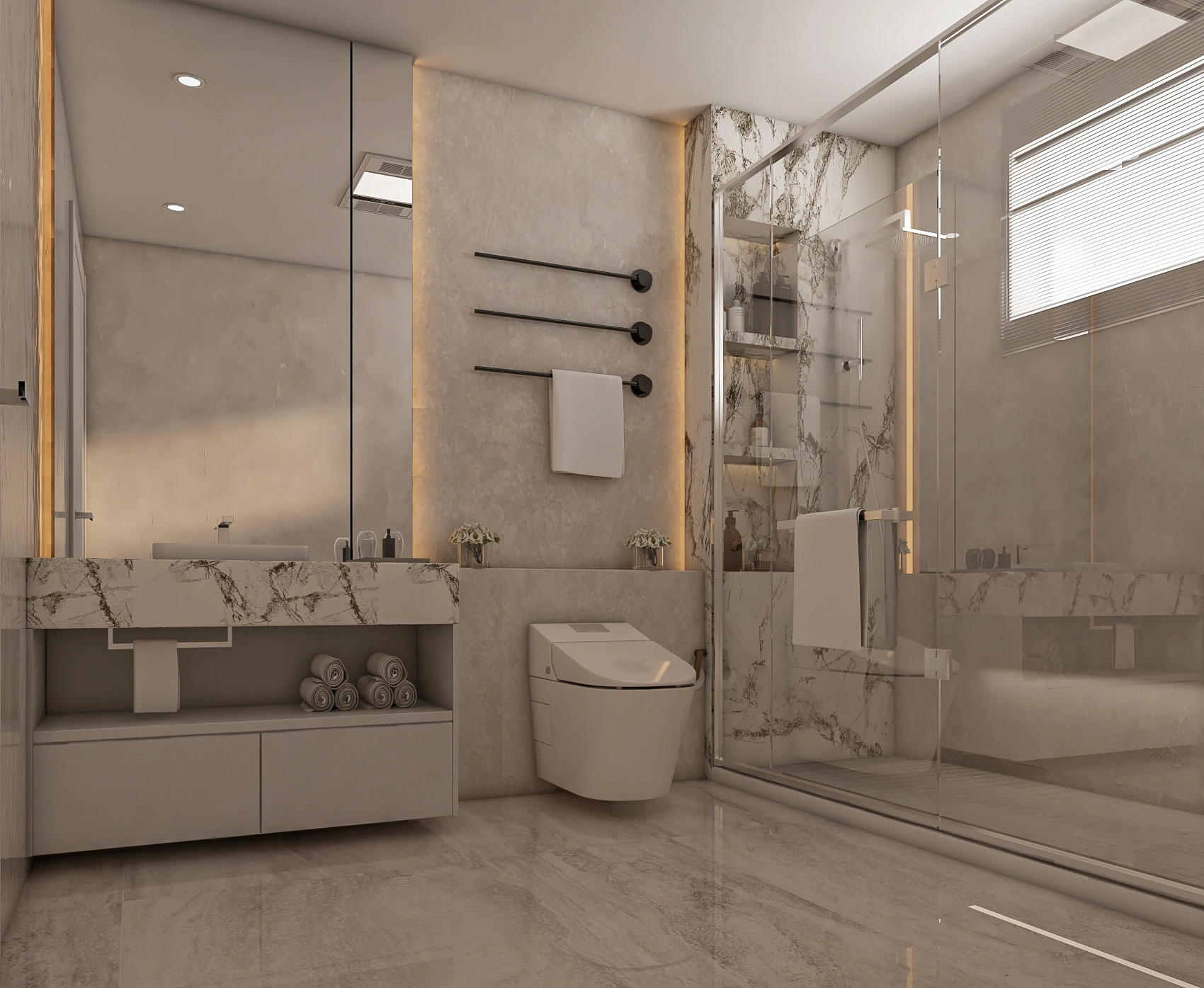
5. Use Lighting to Shape the Space
Ambient lighting
Provides general illumination throughout the room.
Task lighting
Accent lighting
LED strips can also be integrated into mirrors, joinery, niches and architectural details to create a softer layer of illumination.
The positioning of bathroom lighting should be considered early, alongside the layout and ceiling design.
6. Choose the Right Shower and Bathtub
A walk-in shower can create a clean, contemporary appearance and make a bathroom feel more open.
A freestanding bathtub, meanwhile, can become a strong focal point in a larger bathroom.
The decision should not simply be based on what looks impressive. Consider the available space, maintenance, accessibility and daily routine.
In some bathrooms, a well-designed walk-in shower may provide more practical value than adding a bathtub simply for visual impact.
7. Don't Overlook Mirrors
Its size, shape, frame and lighting can significantly influence the overall design.
Large mirrors can help create a greater sense of space, while backlit mirrors can provide soft ambient lighting.
For a more architectural look, a mirror can be designed to align precisely with the vanity, wall finishes or surrounding joinery.
The right mirror should feel integrated into the bathroom rather than added as an afterthought.
8. Pay Attention to Fixtures and Hardware
Taps, shower fittings, handles, drains and accessories should work with the overall material palette.
Depending on the design direction, finishes may include:
● Brushed metal
● Chrome
● Matte finishes
● Brushed brass
● Dark metal finishes
The important point is consistency.
If several metal finishes are introduced without a clear design intention, the bathroom can quickly feel disconnected.
A considered hardware palette gives the space a more cohesive and refined appearance.
9. Design for the UAE Climate
Ventilation and moisture management are particularly important for maintaining the condition of finishes and reducing excessive humidity.
Material selection should also take into account:
● Moisture exposure
● Cleaning requirements
● Durability
● Temperature
● Long-term maintenance
Proper waterproofing and ventilation should be treated as essential parts of the bathroom design rather than technical details to consider at the end.
A beautiful bathroom needs a technical foundation that protects the finished interior.
10. Balance Luxury With Functionality
A successful bathroom should answer practical questions as well as aesthetic ones.
Is there enough storage?
Is the vanity comfortable to use?
Does the lighting work for everyday routines?
Is there enough space around the shower and bathtub?
Are the materials practical to maintain?
Does the layout make sense?
These considerations are what transform a visually impressive bathroom into a space that genuinely works.
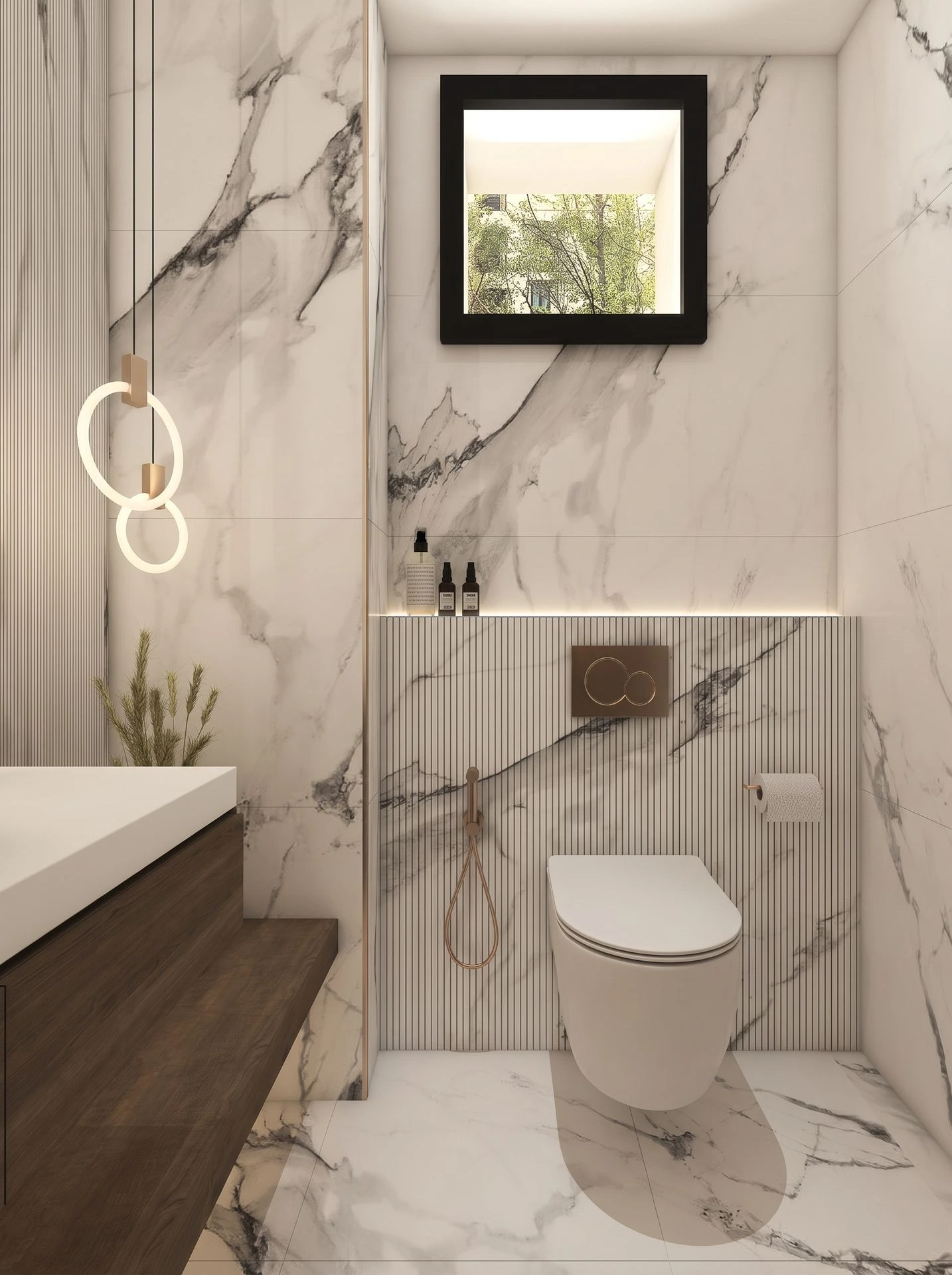
11. Create a Consistent Design Language
If the villa follows a warm contemporary design direction, for example, the bathroom can continue that language through similar materials, colours, wood tones or architectural details.
This does not mean every room needs to look identical.
Instead, the bathroom should feel like part of the same interior story.
Consistency in materials, proportions and detailing helps create a more cohesive villa interior.
12. Think Beyond Trends
Instead of selecting every feature because it is currently popular, focus on details that are likely to remain relevant over time.
Timeless proportions, quality materials, practical layouts and carefully considered lighting can create an interior that continues to feel appropriate years after the renovation is complete.
Luxury is often found in restraint: fewer unnecessary details, better materials and greater attention to how the space works.
What Makes a Bathroom Feel Luxurious?
It is a space where every element has been considered.
The proportions feel balanced. The materials work together. Storage is integrated. Lighting is layered. Fixtures are carefully selected. And the layout supports the way the homeowner actually uses the space.
When design and functionality are planned together, the result feels effortless.
Designing a Bathroom Around the Way You Live
At Domora, bathroom interiors are developed as part of the wider design of the home, with attention to layout, materials, lighting, custom joinery and finishing details.
Whether you are creating a new villa interior or renovating an existing bathroom, thoughtful planning can transform an everyday space into one that feels considered, comfortable and timeless.
Explore Domora's interior design and turnkey fit-out services to discuss your next project.
Frequently asked questions
A luxury bathroom usually combines thoughtful space planning, quality materials, integrated storage, layered lighting and carefully selected fixtures. The overall design should feel cohesive rather than overloaded with decorative elements.
Popular options include natural marble, stone, porcelain and other durable surfaces suitable for wet areas. The right material depends on the bathroom's design, level of use, maintenance requirements and overall interior concept.
Use a clear layout, consistent materials, integrated storage, large-format surfaces and well-planned lighting. A large mirror and frameless glass shower can also help create a more open visual effect.
Custom joinery can be particularly useful when you need to maximise storage or work with unusual dimensions. It allows the vanity, cabinets and other storage elements to be designed specifically around the space.
Lighting is essential. A combination of ambient, task and accent lighting can improve both the functionality and atmosphere of a bathroom while highlighting architectural and material details.
Consider the existing layout, plumbing, waterproofing, ventilation, materials, storage, lighting and overall scope of work. If the renovation involves structural or significant building work, the applicable approvals should also be established before construction begins.